
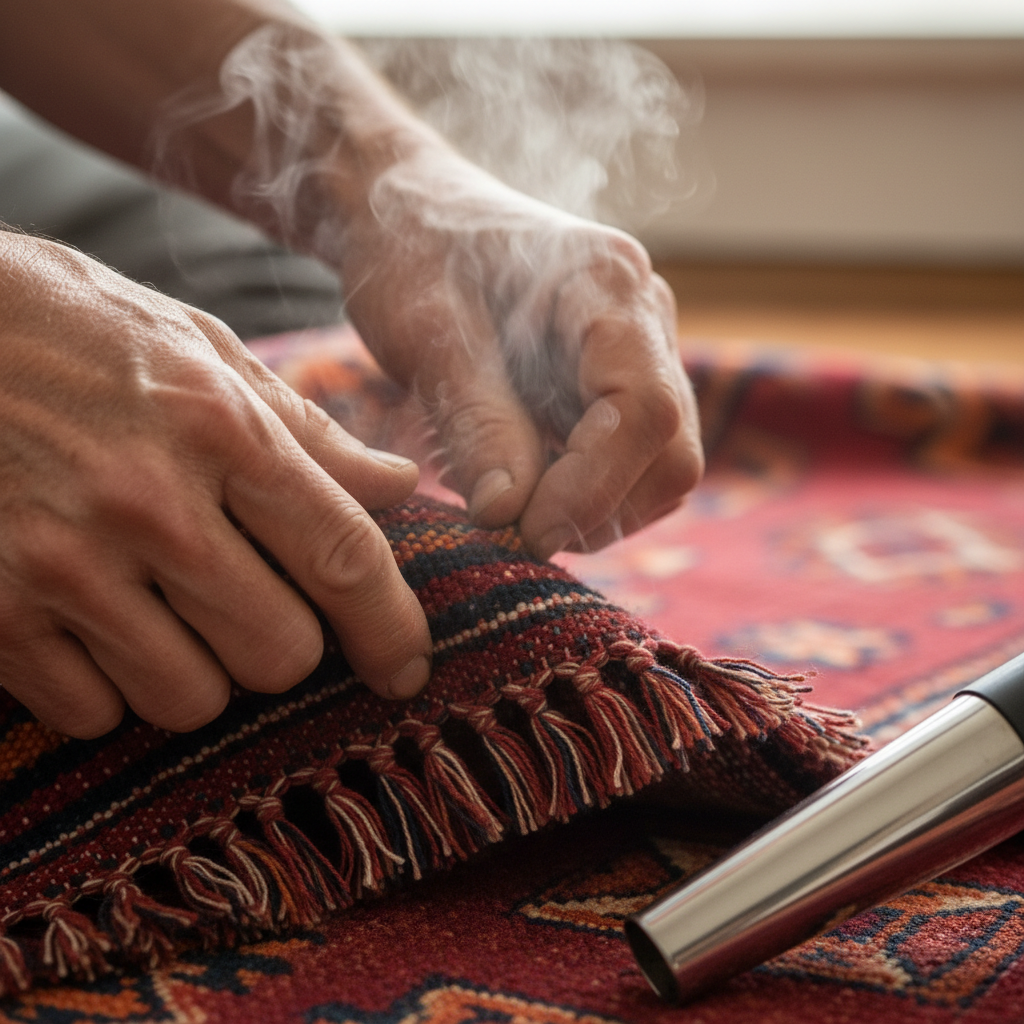
What Forty Years
of Foot Traffic
Left Behind
Carpet Restoration for Objects That Have Outlasted Their Owners
In our Kreuzberg workshop we kneel on Persian silk and century-old Berber wool. We read damage the way a conservator reads a painting — fibre by fibre, stain by stain, until the story is clear enough to reverse.
Fifty Years of Smoke, Absorbed in Silence
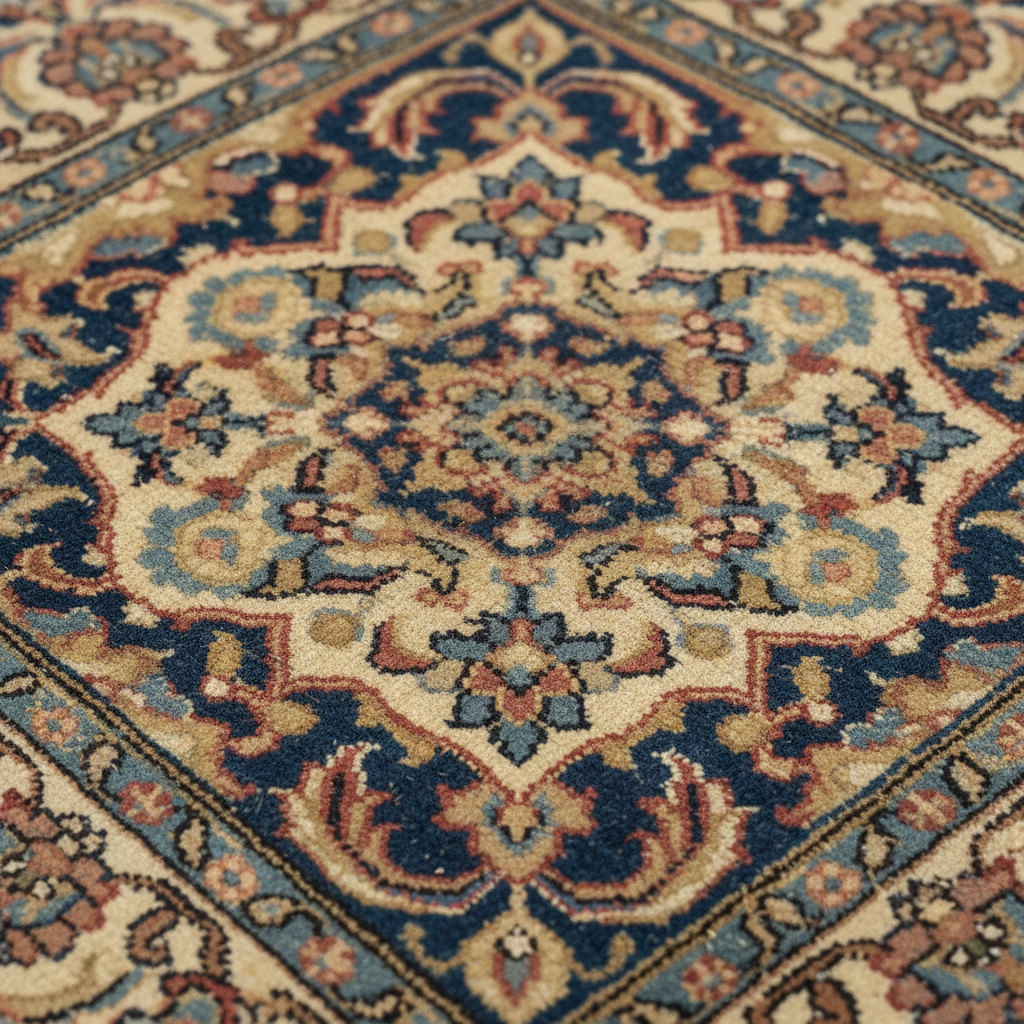
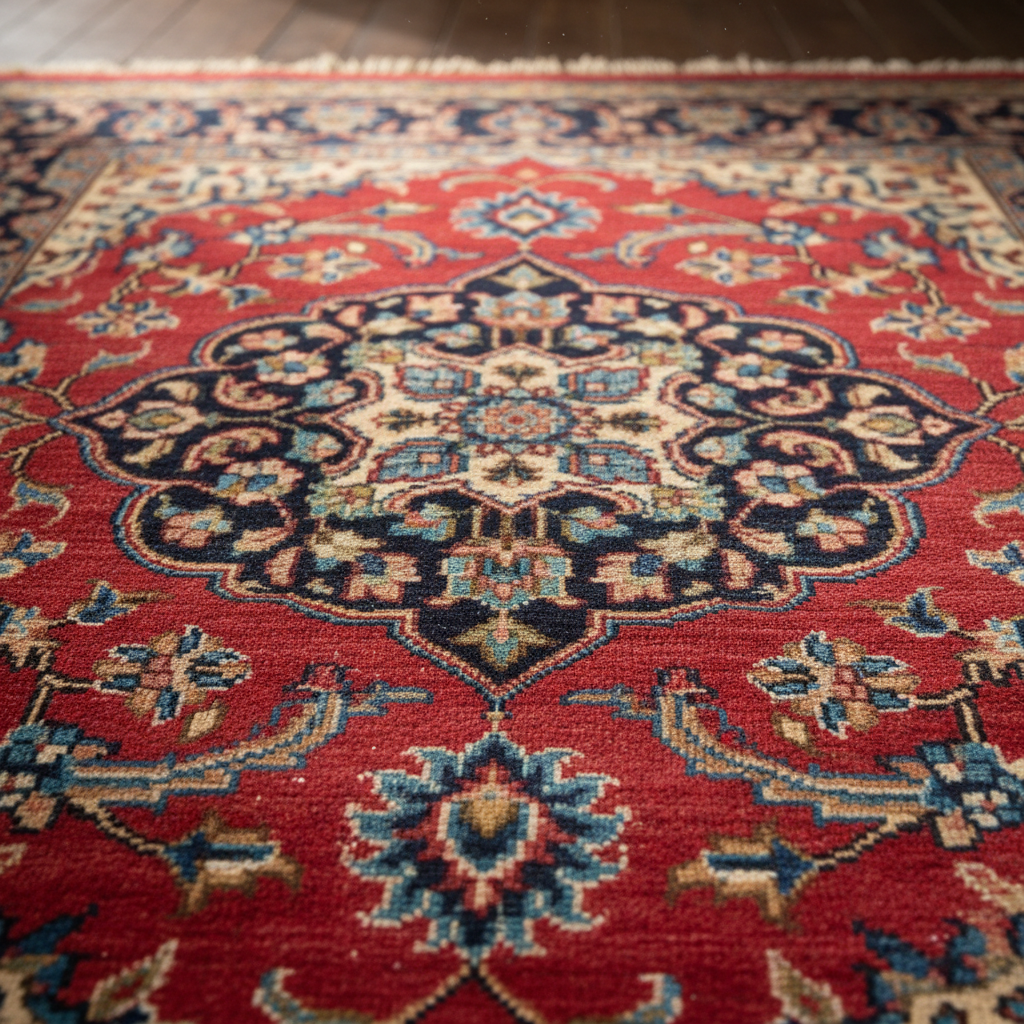
An estate executor brought us a 1960s Isfahan — a hundred and sixty knots per square inch — retrieved from a Charlottenburg apartment where someone had smoked a pipe every evening for three decades. The pile had yellowed from crimson to the colour of old newspaper. The wool still held its structure. The nicotine had simply colonised it.
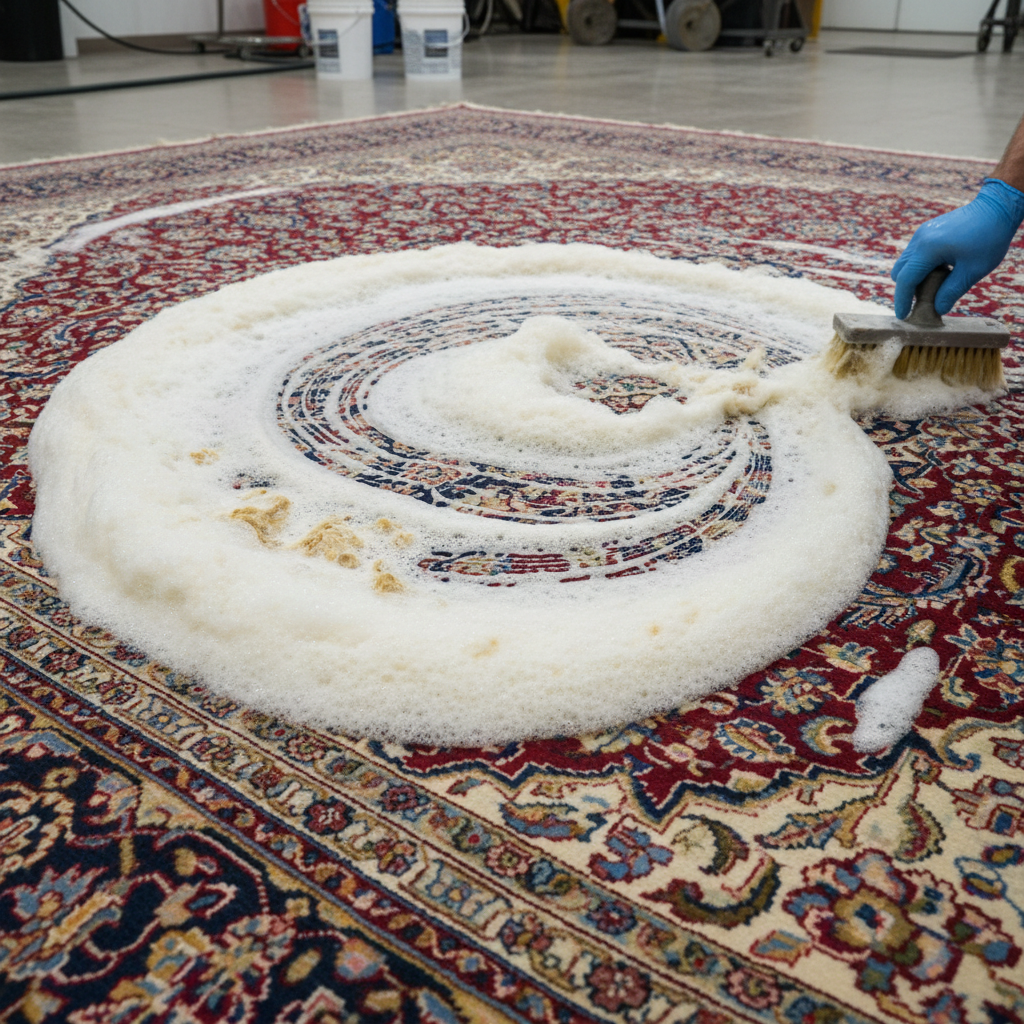
We began with a pH-neutral enzyme soak held at 38°C — warm enough to open the wool fibre, cool enough not to disturb the natural lanolin. The nicotine compounds broke down over four hours. A second pass with a cold-water extraction wand removed the residue without disturbing the mordant dyes beneath.
"We didn't expect to see crimson again. It looked like the carpet my grandmother described, not the one I inherited."
— Margarete Schönfeld, Charlottenburg estate executor160
Knots per sq. inch
4 hrs
Enzyme soak duration
1960s
Carpet origin era
Full
Colour recovery
Three Days Under a Burst Pipe in Friedrichshain
The Beni Ourain arrived rolled in a tarpaulin, still wet. A pipe had failed in the ceiling of a fifth-floor Altbau flat. Three days of standing water. The high-pile Berber wool — natural, undyed — had absorbed roughly eight times its weight. The backing had begun to separate. There was a smell.
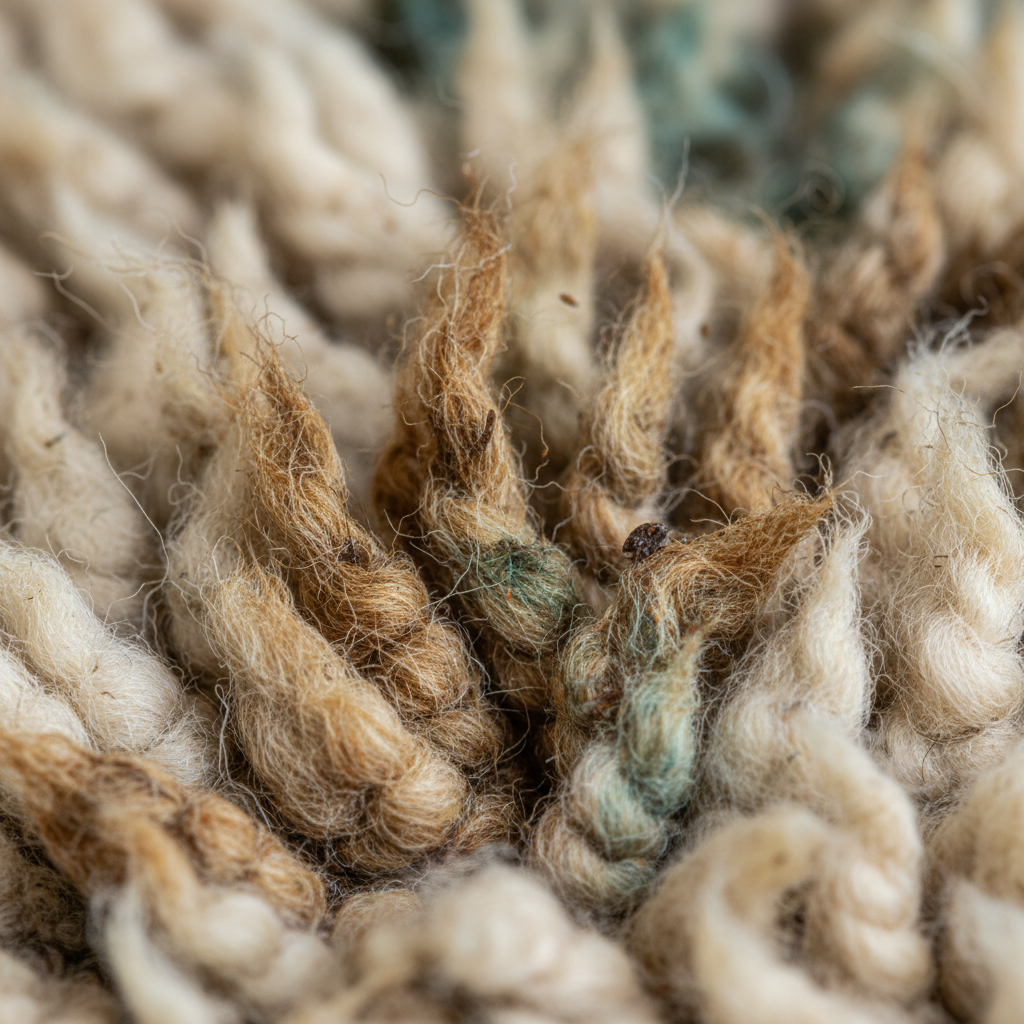
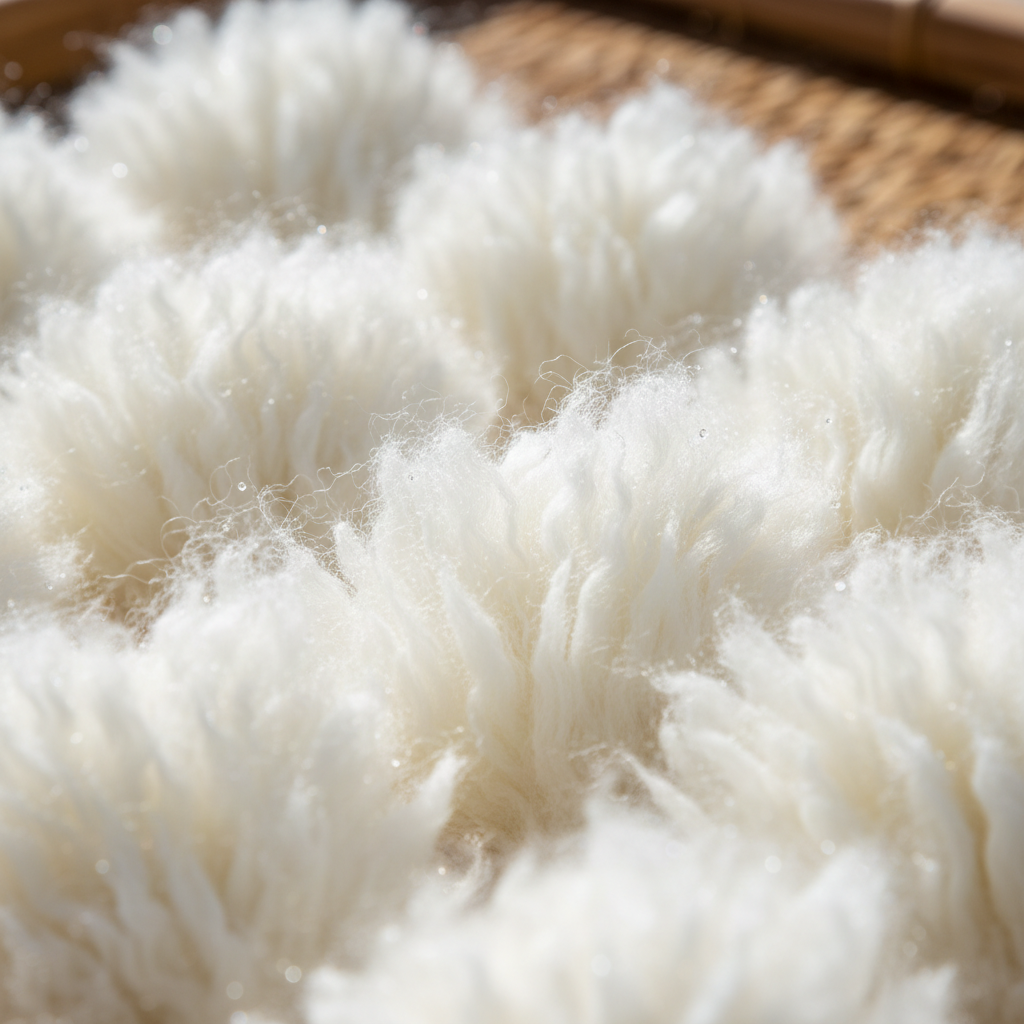
We suspended the carpet vertically in our drying bay — tension distributed across the full warp length, no contact with the floor. Cold-air circulation for 72 hours. We monitored moisture at six points across the weave every four hours. When the core reading reached ambient, we laid it flat for a final inspection pass: fibre by fibre, checking for mould colonisation in the root of each tuft.
We photograph every carpet at intake, mid-process, and completion. For insurance claims — which this was — we provide a timestamped PDF report with moisture readings and process notes. The Friedrichshain insurer settled within two weeks.
"They sent photographs every day. I was in Hamburg. By the time I returned, the carpet was already drier than it had ever been in that flat."
— Jonas Brandt, Friedrichshain tenant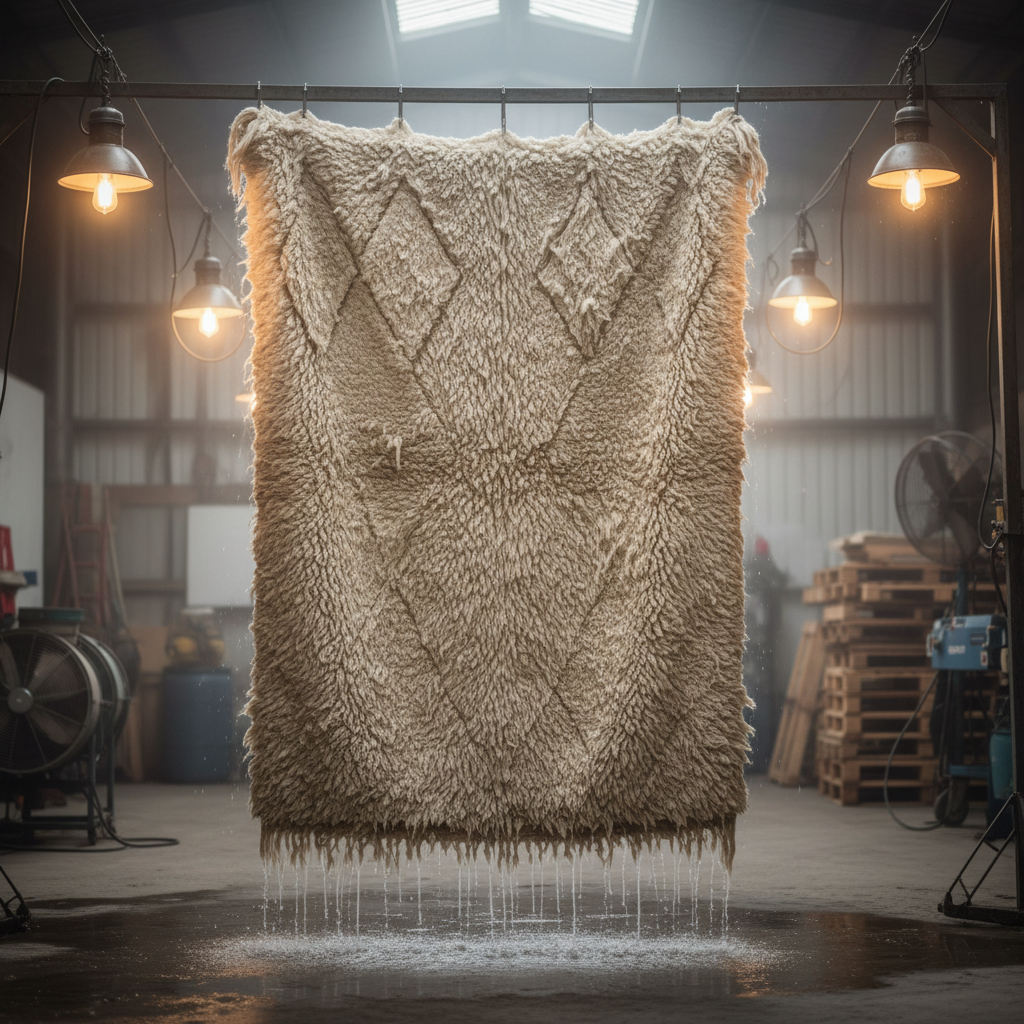
The Weave Carpet
Care Guide
Fourteen pages on storage, rotation, spot-treatment, and when to call a conservator rather than a cleaner. Written for owners of carpets that matter — not synthetic broadloom.
- Fibre identification by touch and sight
- Safe home spot-treatment by stain type
- Storage for long-term preservation
- When professional intervention is non-negotiable
Identify Your Carpet
Before you call anyone, know what you have. The type of carpet determines the correct intervention — and the wrong method can cause irreversible damage.
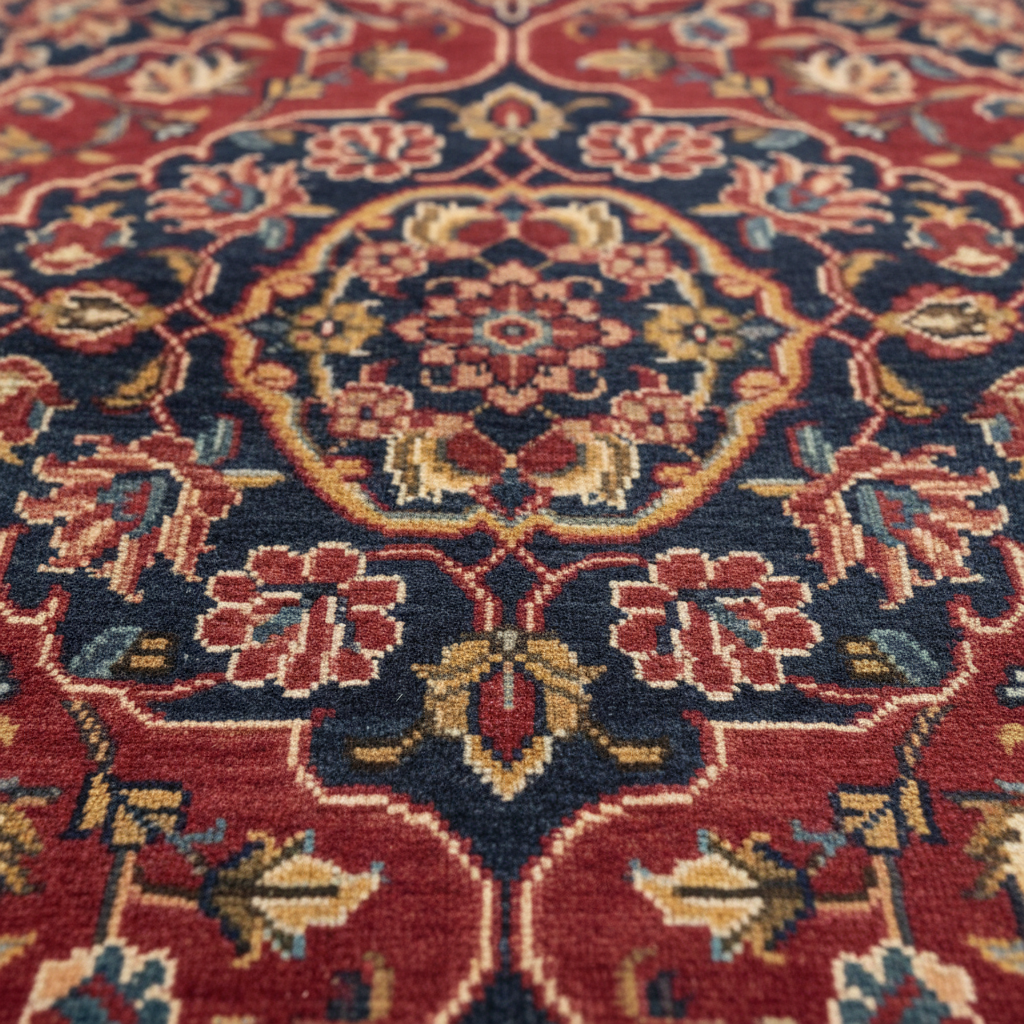
- Asymmetrical or symmetrical hand-knotting
- 80–600+ knots per square inch
- Wool pile over cotton or silk foundation
- Curvilinear floral or medallion patterns
- Natural dyes: madder, indigo, pomegranate
Rotate every 18 months. Never fold — roll pile-in. Avoid direct sunlight; natural dyes fade irreversibly.
Five Steps That
Don't Change
We've been asked to simplify the process. We've declined. Each step exists because skipping it causes damage — sometimes immediately, sometimes years later. This is the sequence, and it doesn't vary.
Intake & Assessment
Every carpet is photographed at intake — overhead, macro of any damage, and a full-length documentation shot. We record fibre type, knot density, dye composition, and existing repairs. This assessment takes between 30 minutes and two hours depending on complexity.
Dry Soil Extraction
Before any moisture touches the carpet, we extract dry particulates using a low-pressure suction table. This removes the grit that acts as a cutting agent during wet cleaning — most amateur cleaning mistakes originate here.
pH-Matched Wet Cleaning
We match the cleaning solution to the fibre and dye chemistry. Natural dyes require pH-neutral solutions. Synthetic dyes tolerate a slightly alkaline wash. Silk demands cold water and minimal agitation. There is no universal formula.
Controlled Drying
Carpets are dried vertically where possible, tension-free. We monitor moisture at multiple points until the reading matches ambient. Rushing this stage causes backing distortion and mould — we never rush it.
Final Inspection & Return
Final inspection under raking light reveals any remaining issues. We document the completed state with the same shot sequence as intake. The comparison report is included with every return — your record of what was done and why.
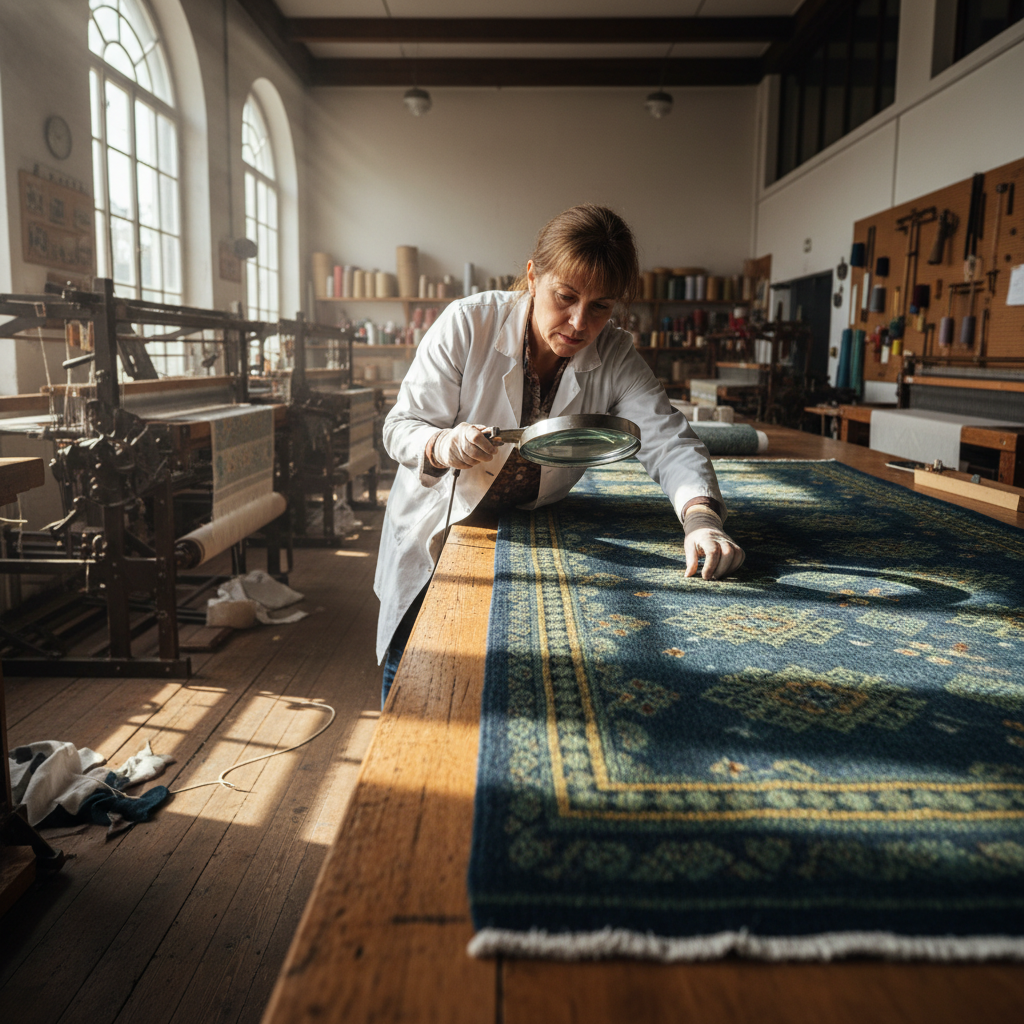
"We don't send carpets out. Every step happens in this building, under our supervision."
14+
Years operating
2,400+
Carpets restored
38°C
Enzyme soak temp.
72 hrs
Max drying time

Elke Hoffmann
Estate Executor, Prenzlauer Berg
"They described the damage in terms I hadn't heard before — 'dye migration', 'warp distortion'. By the time they explained what they'd found, I trusted them completely. The Tabriz came back looking like it had been rewoven."

Tobias Warnecke
General Manager, Boutique Hotel, Mitte
"We rotate three lobby runners across two properties. Weave handles the schedule, stores the spares between rotations, and sends a condition report with each return. It's the only vendor relationship that runs itself."

Nadia Kovács
Tenant, Kreuzberg Altbau
"My grandmother bought the kilim in Istanbul in 1971. I brought it in with red wine across the entire field. They didn't flinch. Six days later, gone."
Bring us your carpet.
We'll tell you what it needs.
No obligation assessment. Kreuzberg workshop, open Tuesday through Saturday, 10:00–18:00. Or send photographs first.
Weave Carpet Restoration · Mariannenstraße 26, 10997 Berlin-Kreuzberg